22 July, 2010

Poet of the Week - Christina Rossetti

We are looking at the poems of Christina Rossetti this week.


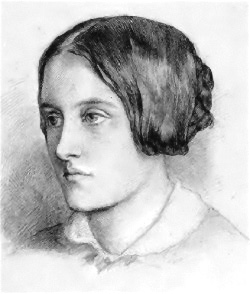
Christina was born in England to an Italian father and and English-Italian mother. She was also the brother of the great artist, Dante Rossetti, who often used her as his model. Christina never married, turning down proposals from two men because of her faith. She was a devoted Anglican and loved nature and many of her poems reflect those two loves.

This is one of our favourites so far:


A linnet in a gilded cage,-

A linnet on a bough,-

In frosty winter one might doubt

Which bird is luckier now.


But let the trees burst out in leaf,

And nests be on the bough,

Which linnet is the luckier bird,

Oh who could doubt it now?

Male Linnet
From the Royal Society for Protection of Birds


21 June, 2010

Art Workshop!

Last month, we again had the pleasure of participating in a wonderful art workshop by Graham Braddock.

We were guided through drawing pictures in 3D, and focussing on perspective and vanishing points.

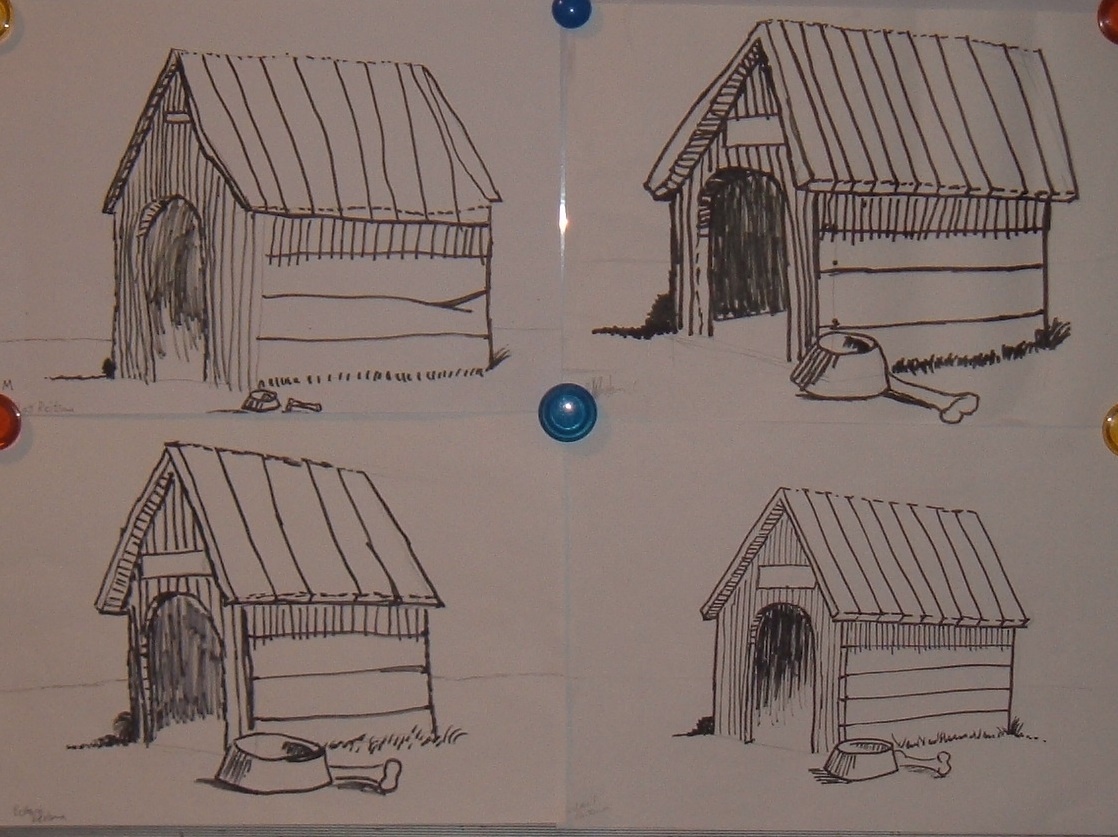
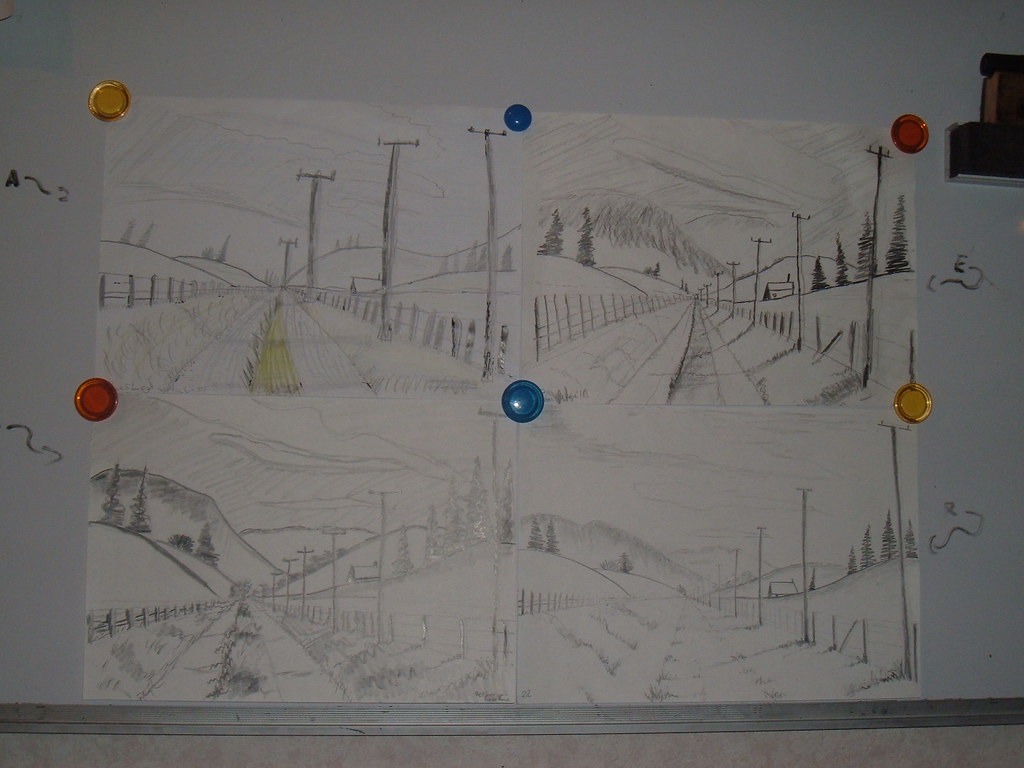
We drew a 3D picture of "Butch's Kennel", and Huntly Landscape and a Kenworth truck.

Here are our pictures:


Ainsley was old enough to join us this year, and I think she did a great job!

Top left: Ainsley (7 yrs), Top right: Emily (10 yrs), Bottom left: Bethany (11 yrs) and Bottom right: Mine.

06 June, 2010

The Habit of Reading Aloud

One of the things my husband and I believe has made a huge difference to our family life and to our children's vocabulary has been reading aloud. We are grateful that when we first were considering homeschooling we discovered both Charlotte Mason's ideas and Classical methods. Both of these stress the benefits of reading aloud good literature (CM would call them "Living books") as often as possible. Since then (about 5 years ago) Eeuwe has attempted to read aloud to the girls every night that it is possible. It doesn't happen on night when he has to go out to church meetings or other things. It always takes place after dinner each night, and after family devotions. Occassionally he'll make up a chapter on a Sunday afternoon if we don't have visitors. So on average he probably gets to read to the girls about three, maybe four nights a week. It is amazing now to look back at all the books he has managed to get through in this time. I am often asked for ideas for read alouds and usually pass on my favourite lists. I thought today I would brainstorm and try and remember all the books that have been read aloud in the past five years!


The Complete Adventures of Winnie the Pooh ~ A.A.Milne

The Chronicles of Narnia (second reading at the moment!) ~ C.S.Lewis

Several Paddington Bear books ~ Michael Bond

Stuart Little, Charlotte's Web, The Trumpet of the Swan ~ E.B.White

Pinnocchio ~ Carlo Collodi

Many of the Beatrix Potter tales

Treasury for Children (several stories) ~ James Herriot

Most of the Little House on the Prairie series ~ Laura Ingalls Wilder

Caddie Woodlawn ~ Carol Ryrie Brink

The Treasure Seekers, Five Children & It ~ Edith Nesbit

The Incredible Journey ~ Sheila Burnford

The Secret Garden, A Little Princess ~ Frances Hodgson Burnett

The Courage of Sarah Noble ~ Alice Dalgleish

Shadrach ~ Meindert de Jong

Just So Stories ~ Rudyard Kipling

The Cricket in Times Square ~ George Selden

Heidi ~ Johanna Spyri

Odd and several other titles by Amy Le Feuvre

Many "Twins" books by Lucy Fitch Perkins

Swiss Family Robinson ~ Johann Wyss

The Hobbit ~ J.R.R.Tolkien (and The Lord of the Rings are sure to come when the girls are a bit older!)

The Little Pilgrims Progress ~ John Bunyan, abridged

Mary Poppins ~ P.L.Travers

Pollyanna ~ Eleaner Porter

The Tanglewood's Secrets ~ Patricia St.John

The Sheep-Pig (Babe, the book), Ace, Daggy Dogfoot ~ Dick King Smith

Lassie Come Home ~ Eric Knight

Alice's Adventure's in Wonderland, Through the Looking Glass ~ Lewis Carroll

The Borrowers, The Borrowers Afloat ~ Mary Norton

Anne of Green Gables ~ Lucy Maud Montgomery

The Veveteen Rabbit ~ Margery Williams

Five Little Peppers and How They Grew ~ Margaret Sidney

King of The Wind ~ Marguerite Henry

The Silver Brumby ~ Elyne Mitchell


There are probably a few more, but this gives you and idea of how many books a committed Dad can read to his children over five years, just a few nights a week! Many of these have enriched our lives deeply, we can refer back to favourite characters, funny sayings, and the girls are often acting out the latest book. I asked each of the girls which book was their favourite, and they each named one of the Chronicles of Narnia. Bethany's & Ainsley's favourite is The Lion, the Witch and the Wardrobe, Emily's favourite is The Horse & His Boy. I'll have to ask Eeuwe which is his favourite! Well, surprise, surprise, Eeuwe's favourites to read aloud are the Chronicles of Narnia (he especially likes C.S.Lewis's sense of humour) and The Hobbit.


Happy reading!


21 March, 2010

Poet of the Week - Walter de la Mare


I have had the best of intentions to study one poet at a time. Today we chose Walter de la Mare, for no other reason than that he happened to be the first poet listed in our Anthology of Poetry for Children. We also have one of his anothologies, Peacock Pie, which the children have often used for copywork.


Here's a silly poem we read today:


Alas, Alack!


Ann, Ann!

Come! quick as you can!

There's a fish that talks

In the frying-pan.

Out of the fat,

As clear as glass,

He put up his mouth

And moaned, "Alas!"

Oh, most mournful,

"Alas, alack!"

Then turned to his sizzling,

And sank him back.


~~~~~


11 February, 2010

1066


Here's a quick question for all you history buffs out there:

What happened in England in 1066?

That's right - the Battle of Hastings, when William the Conqueror from Normandy successfully invaded England and defeated King Harold.


The Bayeux Tapestry was a huge embroidery made depicting the events surrounding and including the Battle of Hastings. It is an amazing work of art.


Well, here in little old New Zealand, a keen historian has re-created the Bayeux Tapestry - but it is not a tapestry, it is an amazingly intricate mosaic made up of the most unlikely material.


Michael Linton and his daughter, Rachael, completed their mosaic copy of the Bayeux Tapestry using tiny pieces of spring steel - the offcuts from patterning disks used on a very large industrial knitting machine. The pieces are approximately 7mm square. The mosaic took Michael & Rachael 25 years to complete and is almost 34 metres long. It is currently displayed in Michael and Gillian's shop, "The Giant Jersey", in Geraldine, in the South Island of New Zealand.


Well, my parents have just been on a holiday in the South Island and brought back a set of amazing CD-roms with a wealth of information about the Bayeux Tapestry and the surrounding events. There are high resolution scans of the mosaic, scene by scene descriptions, a comprehensive study of the history of the tapestry, activities and games for the kids, as well as a large library of related books - including hundreds of Aesop's fables, Our Island Story and many more! There are also images of beautiful illuminated manuscripts, medieval hymns along with their music as well as poems about the events and much more. It is going to provide us history nuts with hours of fun & enjoyment!
Check out Michael's website for more information and pictures of the mosaic - oh, and the "Giant Jersey"!

*********************

UPDATE APRIL 2012!  Please visit Dana's blog to see an animated version of the tapestry, it's great!

28 January, 2010

Where have we been?

We've been enjoying our long summer break! Here's a peek at what we've been up to over the extended Christmas break we have here in NZ:


The girls (with the exception of Ruby) sewed their own Christmas stockings


Thomas enjoyed opening his Christmas presents...


and helping Dad clear out a corner of the yard


and eating morning tea with the girls...


We had a bit of fun at the river one day...


once they managed to get into the "cold" water


The girls each got some fabric for Christmas, so we've been busy sewing:

bags,


and aprons


20 December, 2009

Paul Klee Picture Study


Before starting our art classes using the book Discovering Great Artists, I was dubious about much of what we call "modern art". However, I have come to appreciate much of the art we have been looking at, mainly for the art itself. I don't want to delve too deeply into the hidden meanings of the pieces, or into the artist's lives themselves, I am simply trying to enjoy the art for itself. In the case of Mondrian and Matisse, I have enjoyed their work and see it as more in the category of "design." I'm not sure if these waffly thoughts are making much sense to anyone - but basically, we have enjoyed having a go at replicating these artists' paintings or just using them as inspiration to have a go ourselves. We are also enjoying recognising Mondrian designs everywhere we go! Even my brother's new business cards are based on a Mondrian design!


A couple of weeks ago we looked at the work of Paul Klee. As with a lot of artists, apart from Geninne Zlatkis's water colour inspired by Klee I had never heard of him before.

Paul Klee was a Swiss painter, of German nationality. His father was a music teacher, and his mother, a trained singer. Klee loved dabbling in the visual arts as a teenager and spent a lot of time drawing in his school books. He especially loved caricature. He earned a Fine Arts degree after which he travelled throughout Italy, studying the master painters and spending time with fellow contemporary artists, such as Kandinsky.

Rose Garden, Paul Klee, 1920.

Paul served with the German forces during World War 2, but with the intervention of his father, was kept from the front line. He ended up painting camouflage on war aircraft! He continued to paint and hold exhibitions during the war, and eventually settled in Switzerland.


Klee struggled with colour, and many of his earlier paintings were black & white. This "long struggle with colour" was eventually overcome and Klee managed to produce over 9000 works. In his best year, 1939, he produced over 1200 works.

The painting below, Ad Parnassum (1932) is considered Klee's masterpiece and the best example of his pointillist style. I love it, it reminds me of a fine mosaic.


The painting below is the one we based our art lesson on, although some of the girls chose to use ideas from some of his others. As with many of Klee's paintings, this one is based on building blocks. Doesn't it just remind you of those coloured wooden blocks you played with as a child? Klee also often added a sun to his paintings.


Thanks to Kathy Barbro, of Art Projects for Kids for the idea for our lesson plan.

We had the girls use a set of plastic shapes to trace around and either "build" a castle or some other geometrical design. We traced over the lines with a dark coloured oil pastel or crayon, and then filled in the shapes with pastel or watercolour pencils. Here are the results:

Castle by one little friend, age 5.

Castle by another little friend, age 7.

The Landscape of Holland, Ainsley (7), 2009.

Shape City, Emily (9), 2009.

Block Castle, Bethany (11), 2009.

And to top off our last art afternoon for the year, we made these little "gingerbread houses" for afternoon tea:


**************************************************************************


Related Posts Plugin for WordPress, Blogger...